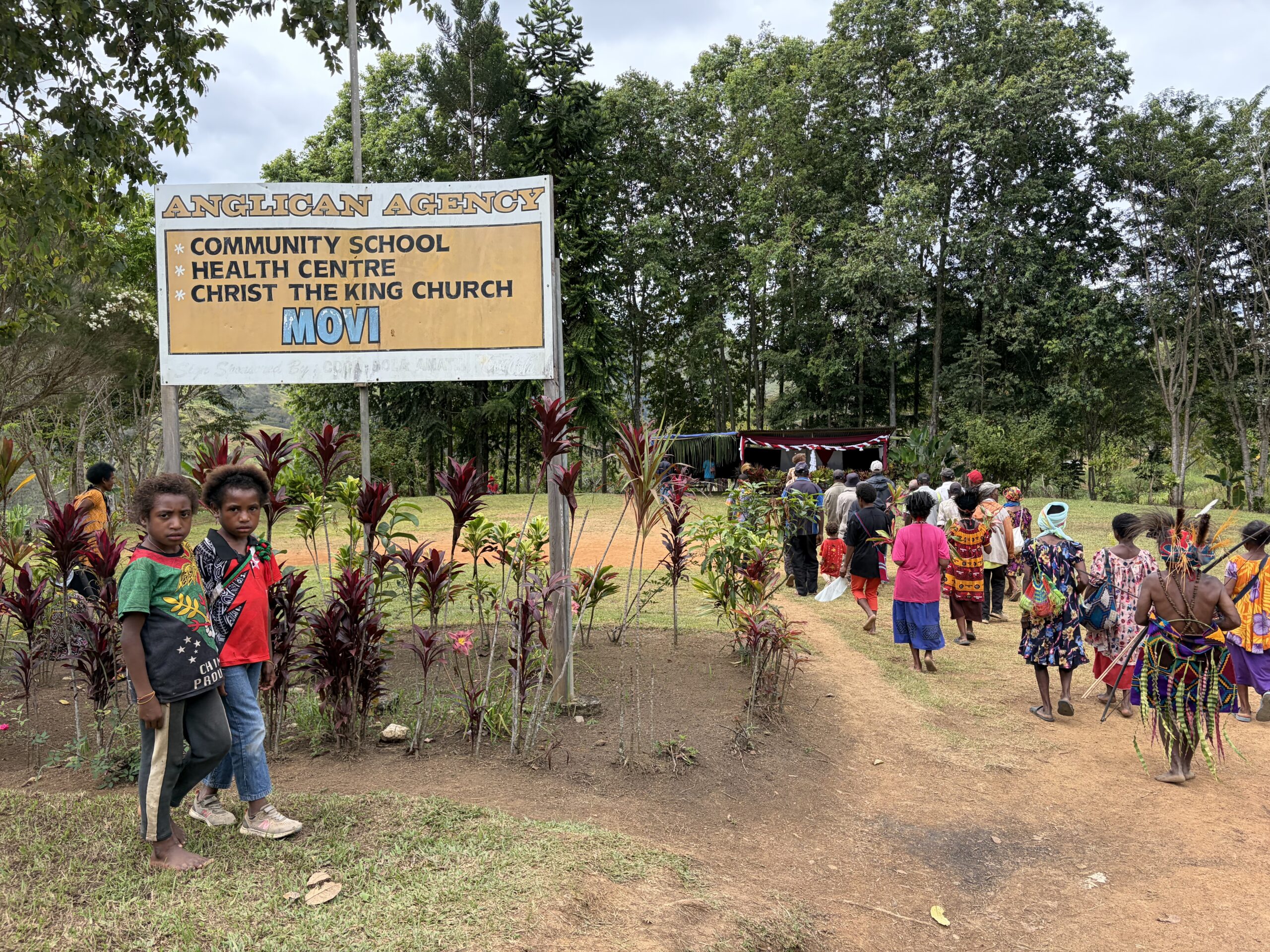
From 6–20 July 2026, Mark and Phoebe travelled with Bishop Andrew of the Diocese of Waiapu to two provinces in Papua New Guinea to visit Movi Health Centre in Simbu Province, and Katereda Hospital in Oro Province. The purpose of the visit was threefold:
- Find solutions to restore power and water to both facilities
- Pilot a new Church and Community Resilience workshop in both parishes
- Strengthen relationships with the local communities, Anglican Health Services, Diocese of Waiapu, and with other Anglican Agencies including Mother’s Union and the Church Partnership Programme
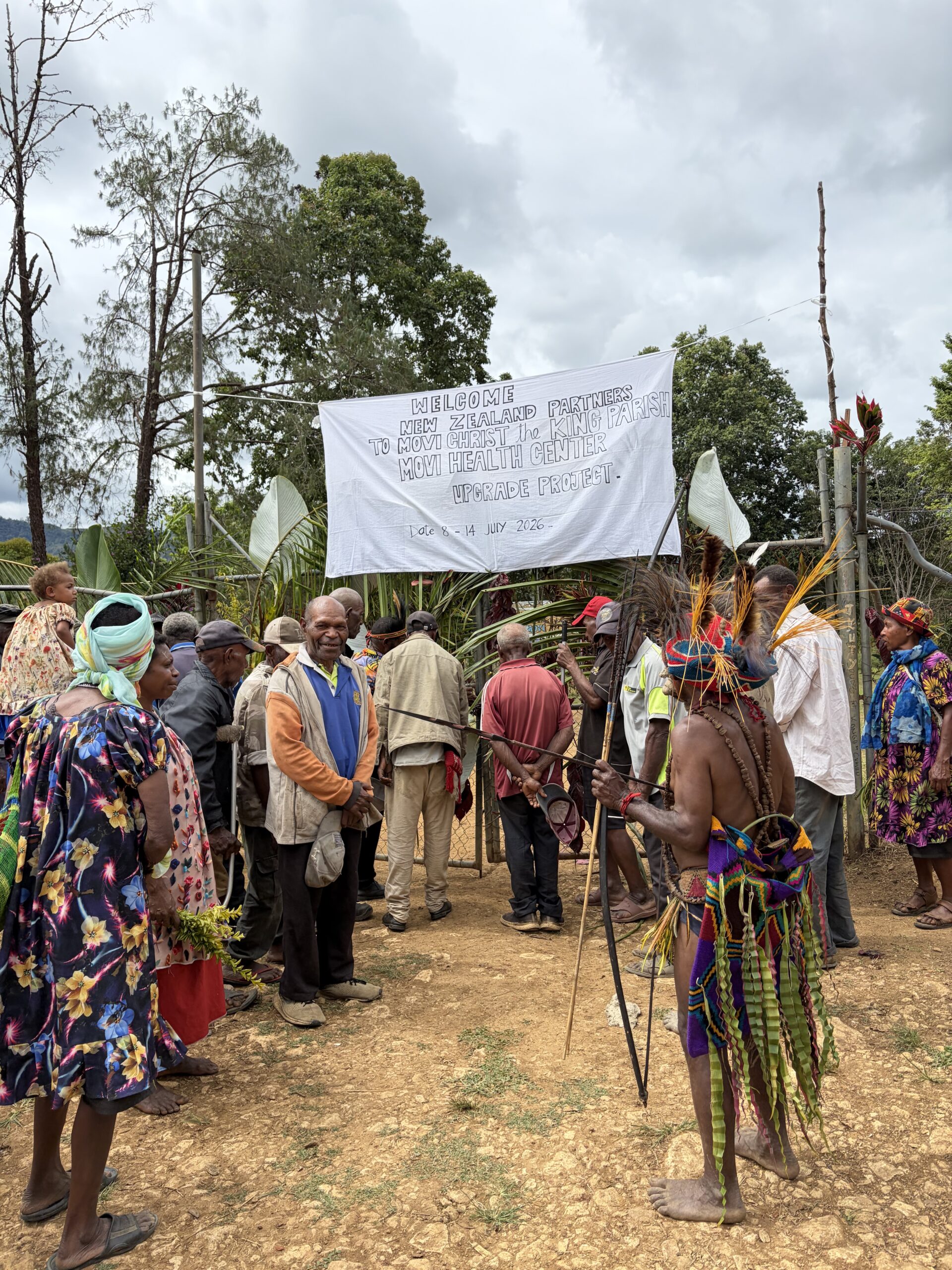
Welcome into Movi
What we found
Our two week trip was split in half, with one week spent in the Siane Valley in Movi, and the second week spent in Popondetta, Oro Province. In both locations, we focused on health facility needs assessments and the facilitation of a pilot disaster preparedness workshop for the two parish communities.
At Movi Health Centre, Simbu Province:

Maternity Ward, Movi
- A gravity fed, safe water pipeline constructed by the World Bank had been cut, meaning the local community wasn’t receiving safe water
- Two 10,000-litre catchment tanks (both damaged and untested), are the clinic’s only water source
- There are 0 cots in the maternity ward, and few beds throughout the hospital- patients and mothers sleep on hard wooden benches and bring their own bedding
- Existing solar lighting only lasts until 9pm, and is insufficient for complicated medical procedures, particularly complicated births. After 9pm, patients and staff must use torches for navigation and procedures
At Katereda Hospital, Oro Bay:
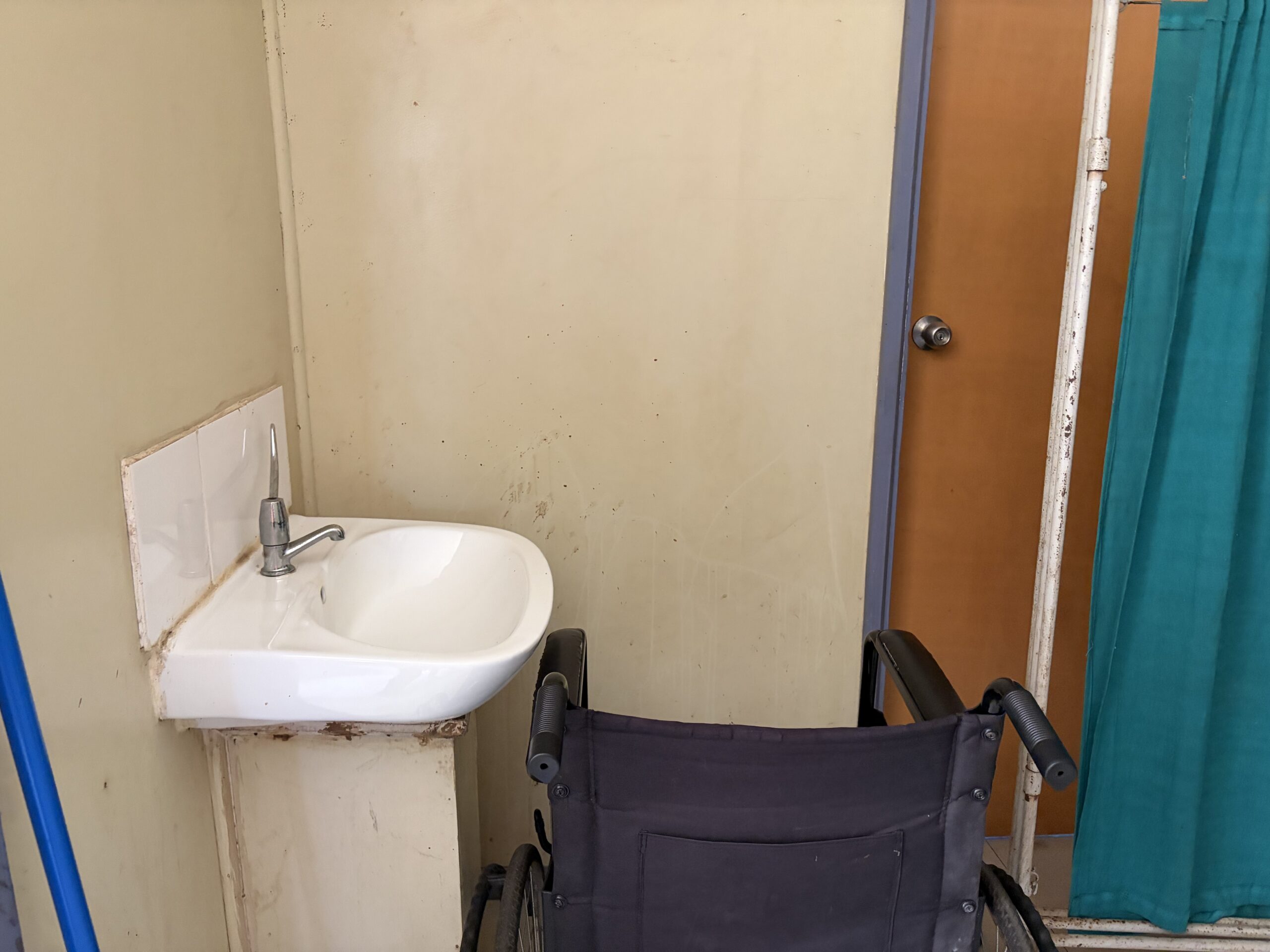
One of the sinks that hasn’t been used in 4 years
- Has been operating for 4 years without a working generator, meaning no water has entered the facility since 2022
- Has a high-end 2-million-kina water treatment plant (donated by a local politician), with two large water tanks and a strong water pump system. They are all in good repair but lack the power to run properly. Water is currently being carried up from the river, which is a 5–10-minute walk away, up a muddy slope
- Consists of 8 wards, with 15 staff and 32 nursing students on placement
- Has light bulbs completely broken in 5 wards, and a solar system that only powers the facility until midnight
Based on our needs assessment at Movi, our local implementing team decided that solar power is the best energy solution; implementation will include the installation of new batteries, an inverter, LED lighting in every ward, and a permanent connection to the nearby safe water spring. Materials for the first stage of repair were purchased alongside the team in Goroka before we flew out, and the local implementing team has already begun clinic repairs.
At Katereda, one generator repair could return water to the whole hospital; as such, we plan to find a suitable repair to the generator and water pump system. To address insufficient lighting, we will work to replace the old batteries and restore bright lighting in every room and ward.
Disaster resilience workshops
We facilitated a new disaster preparedness workshop at both Christ the King Parish in Movi and St. Andrew’s parish in Eroro. The workshop incorporated biblical reflections from Bishop Andrew alongside practical discussions and learnings about existing hazards, existing strengths, and priority actions.
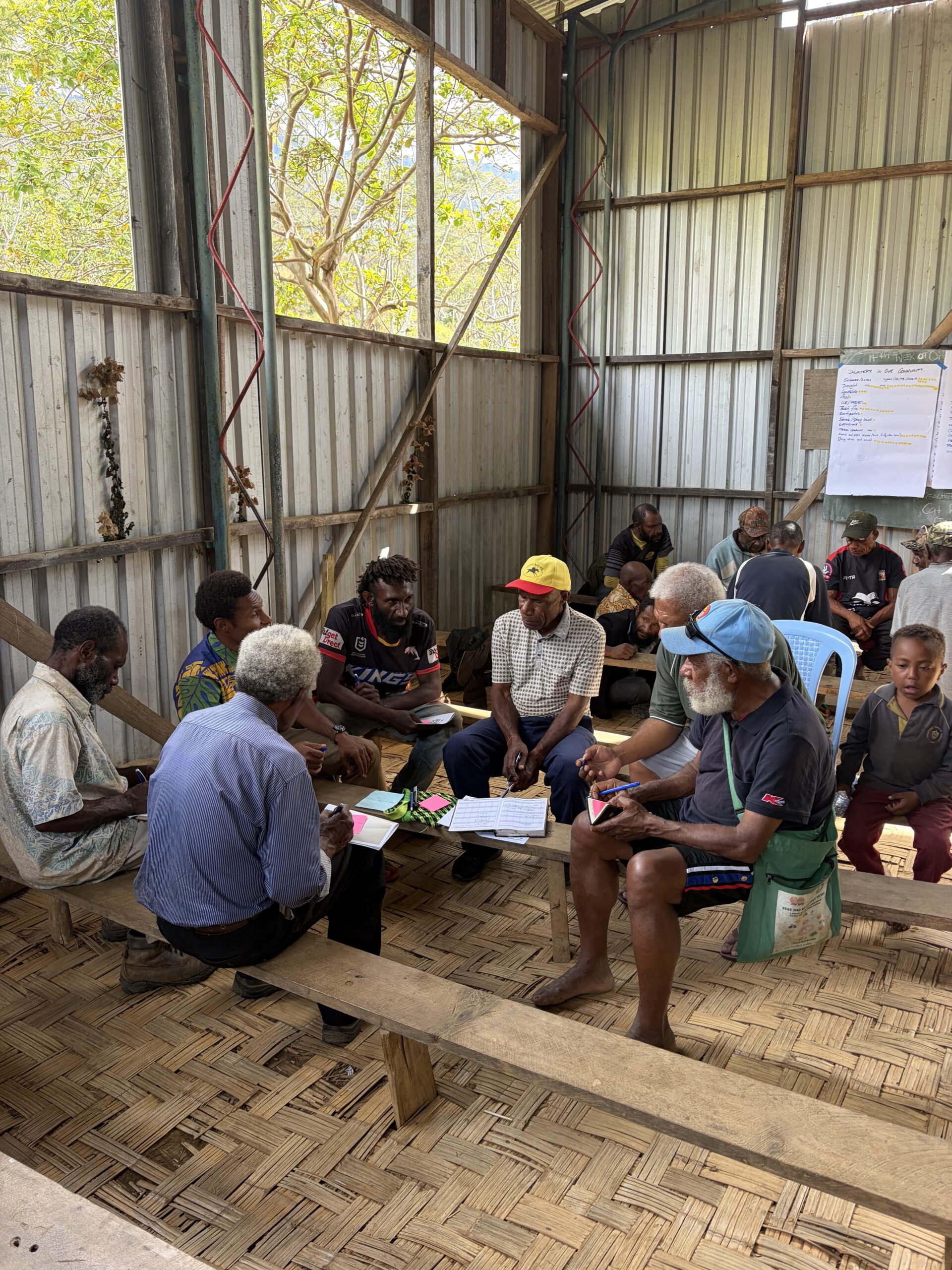
Movi Workshop Participants Discussion
In Movi, 35 participants attended the workshop. They drew from their extensive knowledge of the land, and their experience with strong earthquakes in 1998 and 2025. We ended the workshop with an abundance of new knowledge that we are going to transform into a Disaster Preparedness Plan for the community.

St. Andrews Workshop turnout, Eroro
Our workshop with the Eroro community was very different; where we had expected 20 participants, over 100 arrived, rising to 120 across the two days. People arrived from all eight villages surrounding Eroro. We handed out flipchart paper and watched communities draw their own villages from memory with incredible detail. They then filled over two pages with priority actions for their community and selected 10 individuals to be part of the Community Resilience team.
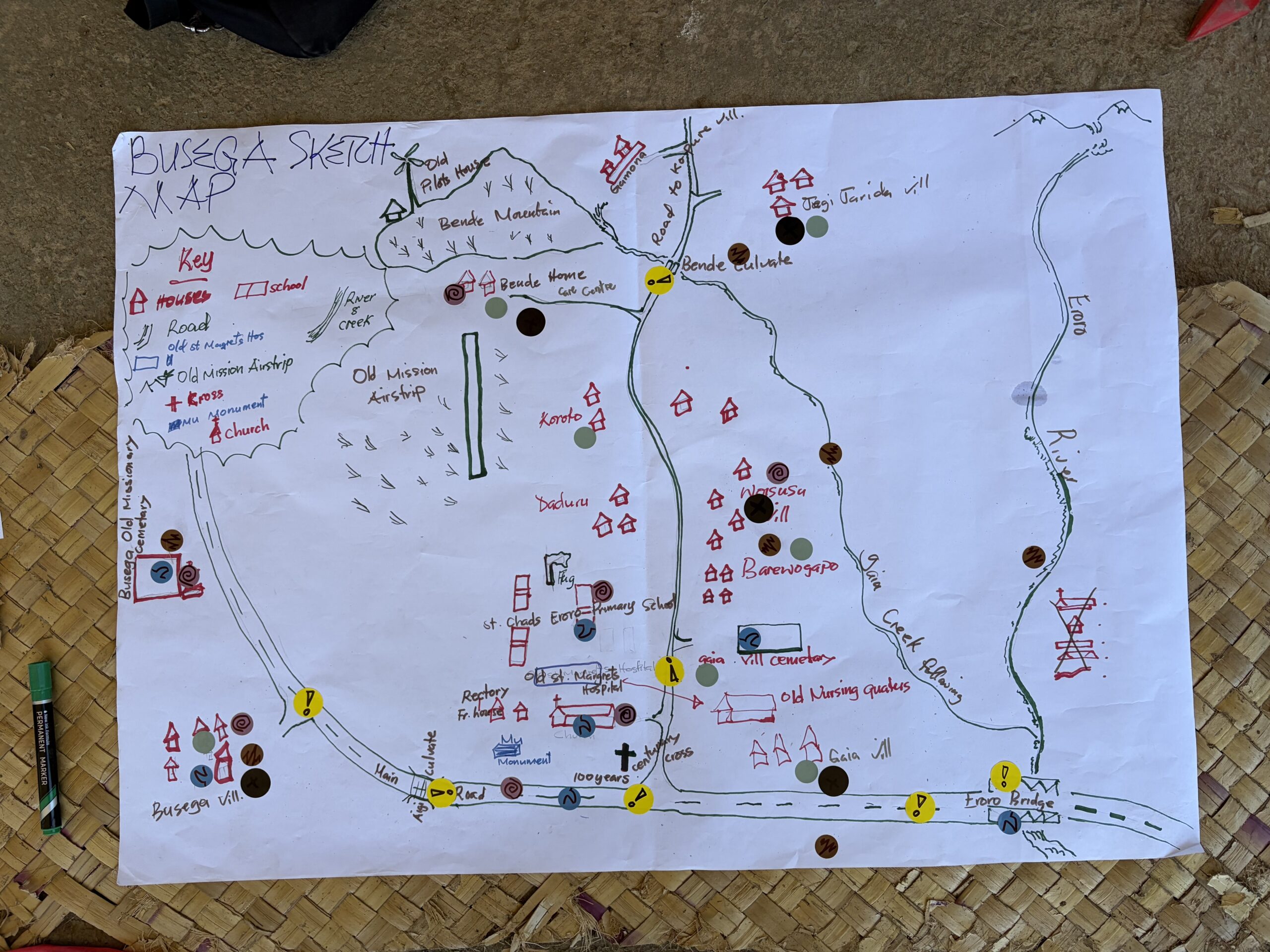
Sketch map from Busega Village Participants
Many of the actions written down came from the Eroro community’s firsthand experience with Cyclone Guba in 2007, when floodwater rose more than three metres – higher than a house. One woman told us a story about having to choose between evacuating her children and staying with her elderly father-in-law. Though her father-in-law told her to “run for your lives, because tomorrow is your future,” she chose to stay with him and pray at the request of her 5-year-old son.
We have learned a lot from facilitating this workshop in two different locations, and we will be working alongside the Mother’s Union and Church Partnership Program to translate the workshop and adjust it to better fix a PNG context. We will also be putting the information we gathered into Disaster Preparedness Plans for both communities.
Moving Forward
The hospitality and generosity we were shown throughout our trip was remarkable; every community met us with singing, welcome programmes, and elaborate meals grown from their own gardens.
We are immensely grateful for the time we spent alongside the amazing health and community teams in Movi and Eroro. We are especially thankful for Bishop Andrew and his expertise and wisdom throughout the trip. Moving forward, we are excited to continue growing in partnership with the Waiapu Diocese, and in relationship with the lovely villages who welcomed us like family. We are encouraged that repairs to the health facilities are already underway and will continue to share updates from our local partners.