
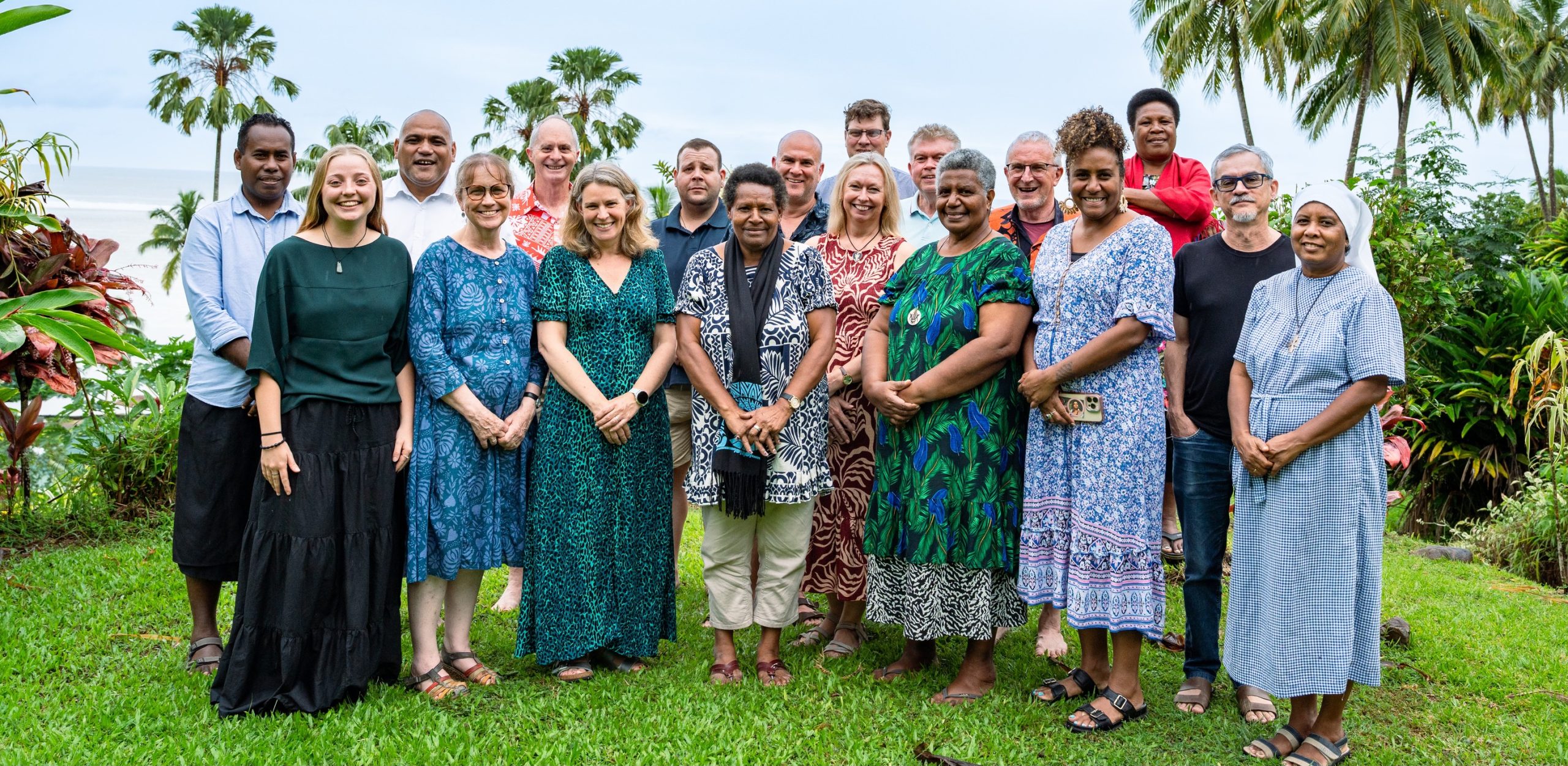
Anglican Missions gathered with representatives of Anglican development agencies and church partners from across Oceania in Fiji in April for the 2026 Oceania Regional Advisory Committee (ORAC) conference. The conference brought together agencies representing the Anglican Church across the Pacific and wider Communion, including participants from Fiji, Tonga, Papua New Guinea, Solomon Islands, Aotearoa New Zealand, Australia and the United Kingdom.
Held on Fiji’s Coral Coast, ORAC 2026 provided a space for Anglican agencies and partners to share updates, strengthen relationships, and discuss practical responses to some of the major issues affecting communities across the region. Over the course of the gathering, participants discussed disaster preparedness, climate resilience, safeguarding, gender justice, water and sanitation, oceans and plastics, and the ethical use of artificial intelligence in development and church work.


There were several key takeaways from the conference:
1. Strengthening Regional Preparedness
ORAC 2026 highlighted the emerging importance of the church before, during, and after disasters, especially in a Pacific context. Effective disaster response depends on preparation before a crisis occurs. Tools such as PIRR and CIVA were discussed as ways of helping churches and communities assess vulnerability, identify strengths, and plan more effectively. ORAC participants were given a chance to practice CIVA Talanoa in the village of Namaquamaqua.
2. Oceans, Plastics and Creation Care
Archbishop Sione opened the discussion on oceans and plastics with a call to safeguard creation, renew life on earth, and recognise the importance of the ocean for Pacific communities.
“We are the ocean… and you shouldn’t define our life by how you want us to live.” – Archbishop Sione.
ORAC participants also learned more about the No Pelestiki campaigns in Tonga and Vanuatu, which have been highly effective and are inspiring further work in the Plastics space within the Anglican Diocese of Polynesia (ADoP).
3. Safeguarding
The discussion on safeguarding moved beyond policy alone and considered how safeguarding relates to trust, leadership and the use of power within church and community life.
Participants reflected on the need for training, clear reporting processes, safe church environments and greater awareness of the different ways people can be vulnerable, including children, young people, women, people with disabilities, staff, volunteers and community members.

4. Gender Justice and Shared Responsibility
Participants discussed the importance of dignity, safety and shared flourishing for women, men, young people and whole communities. They highlighted existing gender inequalities across different cultures, and recognised that language around gender justice can be complex across different cultural and church contexts.
One phrase from the discussion contrasted “power over” with “power together,” capturing the importance of relationships that are not based on domination, but on mutual dignity and responsibility.
5. AI and Ethical Development Practice
ORAC 2026 included a session on AI and the ethics behind its use. Participants discussed possible practical uses of AI, including summarising documents, drafting reports, organising notes, generating ideas, and reducing administrative burdens. However, the session also raised concerns about privacy, consent, data security, environmental costs, cultural knowledge, misinformation, and the risk of replacing human judgement with automated outputs.

Moving Forward
Moving forward, ORAC participants agreed on several goals.
- Resources sharing– across different churches and agencies, trying to work towards a more holisitic “Anglican” way of working
- Reimagining power– working to recognise power imbalances and seek equity and justice for marginalised groups
- Wider participation– ensure that future ORAC conversations and meeting include everyone, with a specific focus on the inclusion of women, youth, and Māori
- Solidarity– recognising the need for collective support and collaboration during crisis