
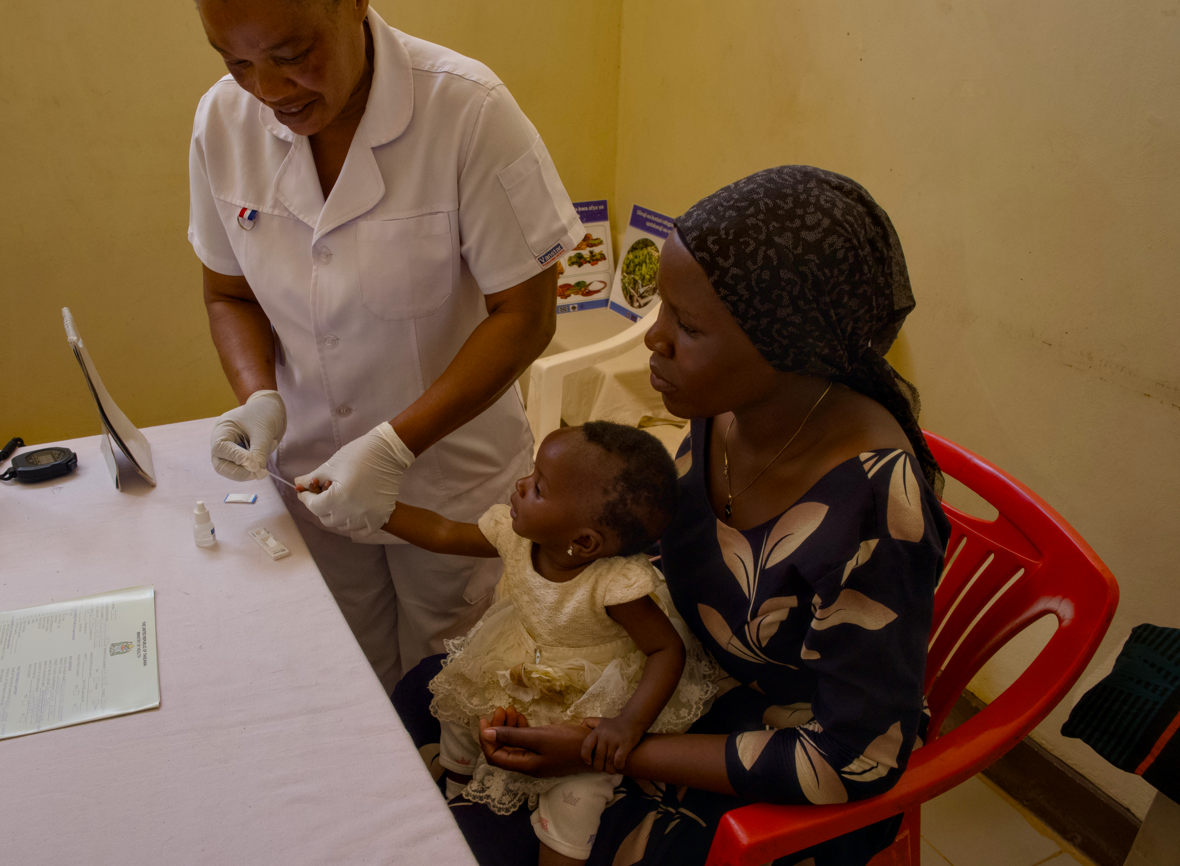
In March and April 2026, Anglican Missions projects officer Mark Mitchell visited Tanzania to monitor the PMTCT programme linked to Mvumi Mission Hospital, and to spend time with the Anglican Church of Tanzania (ACT), church leaders, health staff, community health workers, and families involved in the work.
The visit included time in Dodoma, Mvumi, Mtumba, Sukumahela, and surrounding church institutions and communities. While the primary purpose of the visit was programme monitoring, it also provided an important opportunity to better understand the wider direction of the Church in Tanzania and the role it continues to play in health, education, livelihoods, and community life.
One of the strongest impressions from the visit was the level of trust the Church continues to hold within communities. Whether in hospitals, villages, training centres, or church meetings, the Church remains one of the few institutions with a consistent and deeply rooted local presence.
PMTCT at Mvumi Mission Hospital
Much of the visit centred around Mvumi Mission Hospital and the Prevention of Mother-to-Child Transmission (PMTCT ) work Anglican Missions is supporting through the Diocese of Central Tanganyika. The

programme combines hospital-based maternal and child healthcare with community outreach, household follow-up, counselling, and support through volunteer community health workers.
Community health workers follow up mothers who miss appointments, carry out home visits, encourage treatment adherence, support infant testing schedules, and work with families facing difficult household circumstances.
One of the clearest observations from the visit was that the effectiveness of the programme depends not only on medical treatment, but also on trust, ongoing accompaniment, and practical family support. At the same time, the visit highlighted the gap that can exist between health advice and the realities many families face.
One mother explained:
“These medicines are difficult when there is no food in the house.”
The mothers involved in the programme demonstrated a strong understanding of nutrition and treatment adherence. However, poverty, drought, and rising food costs continue to affect household resilience and health outcomes. The connection between food security, nutrition, and treatment adherence was evident throughout discussions with both families and community health workers.
Rose, Christopher and Letitia
One of the strongest demonstrations of the benefits of the programme came while meeting Rose and Christopher and their seven-month-old daughter, Letitia.
Their eldest child, now nine years old, was born HIV-positive. Looking back, Rose explained that during that pregnancy she had not accessed services early enough and had limited awareness of the support available. Christopher reflected that services existed then, “but not in the way the hospital is supporting families now.”
With Letitia, they have learnt a different approach. Through early testing, counselling, ARV treatment, follow-up by community health workers, and support from Mvumi Hospital, Letitia is healthy and HIV-negative. Rose described the difference between the two children:
“At this age she was having fevers and diarrhoea, every day she was sick.”
As they spoke, Letitia sat healthy in her mother’s arms. Christopher also spoke openly about supporting his wife with treatment adherence and encouraging other men to continue standing alongside their families.
“Men should stay with their wives and support them. When you support each other, the children can grow healthy.”
In one family, the difference between two children demonstrated the impact that early testing, treatment, counselling, and consistent community follow-up can make.
Beyond the Project
As the visit progressed, it became clear that the PMTCT programme sits within a much broader story of church ministry and community engagement.
Meetings with ACT leadership highlighted a growing vision for a more holistic approach to mission and development, linking health, education, livelihoods, peacebuilding, environmental restoration, and community resilience. This was demonstrated during three of the meetings scheduled during the visit:
- At Kilimatinde and Mvumi hospitals, the strengths and pressures facing church health institutions were both clearly visible. The Christian ethic of care remains deeply embedded within the hospitals and continues to shape the trust communities place in them. At the same time, these institutions are operating in increasingly difficult financial and operational environments.
- At Care of Creation, land previously described as near-desert had been transformed through regenerative agriculture, water retention, and careful land management into a productive demonstration site.
- At Sukumahela, discussions focused on how church-owned land might support livelihoods, employment, agriculture, and long-term institutional sustainability.
Across these different ministries, one consistent theme emerged: the Church’s strength lies not only in its institutions, but in its long-standing local presence and relationships within communities.
Reflections
The visit reinforced the importance of working through church structures and local relationships; the Church’s greatest strength is its embedded presence within communities through parishes, hospitals, clergy, volunteers, and community networks. Through this, it can influence attitudes, reduce stigma, support behaviour change, and mobilise communities in ways that external organisations often struggle to replicate.
That was particularly evident within the PMTCT work.
The programme is not only supporting the reduction of mother-to-child transmission of HIV, but also strengthening family support systems, encouraging treatment adherence, reducing stigma, and helping connect vulnerable families to ongoing care.
The visit also highlighted significant opportunities for deeper partnership between Anglican Missions and ACT, including in areas such as community resilience, livelihoods, governance strengthening, and institutional sustainability.