
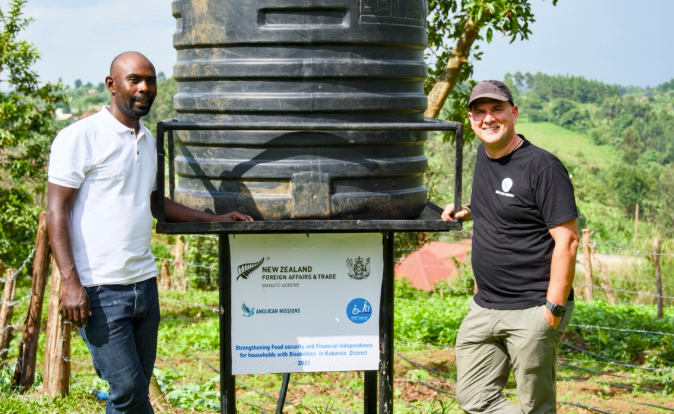
Anglican Missions visited Uganda in March 2026 to connect with the Rwenzori Special Needs Foundation (RSNF) and strengthen our relationship with the community.
The visit consisted of meetings with the RSNF leadership team including Daniel Baguma, visits to community groups and beneficiary households, and observations of agriculture activities.
RSNF Project Activities
The visit saw a depth of commitment, care and trust at the heart of RSNF’s work.

Village Savings and Loans Associations (VSLAs) and Household Resilience
VSLA groups are delivering value well beyond access to savings and small loans. Their success has enabled the groups to mobilise and grow their own financial resources. Each group began with a seed grant of UGX 1,000,000, and participants reported that the fund has more than doubled in every case through regular savings contributions, loan repayments, and interest earned on loans issued to members.
Across the visited communities, the groups are functioning as spaces of peer support, mutual encouragement, and shared problem-solving. This is particularly important in a context where caregivers, especially mothers and grandmothers, often experience social isolation and stigma associated with disability.
“We are no longer alone. Now we meet others who understand what life is like for our children and for us.” For many caregivers, the groups provide a rare opportunity to connect with families facing similar challenges, reducing isolation and strengthening confidence.
Community members from Kichwamba village mentioned the value of group loans and savings through the example of purchasing pigs. Not only did these pigs support individual households, but their offspring were used to support collective wellbeing through distribution or sales to strengthen the shared fund. This demonstrates an encouraging shift from simple savings and lending towards collective livelihood development and asset growth.

Agriculture, Nutrition, and Irrigation Project
The visit also focused on monitoring visits to RSNF’s embassy-funded agriculture programme locations. This project was designed to strengthen food security and provide financial independence for households with disabilities. It has involved the installation of drip irrigation systems at health centers alongside nutrition and livelihood trainings.
The project has been highly effective at educating community members about food security and nutrition. One caregiver reflected,
“I had all this food at home, but I only thought of planting it and selling it. Now I know we can also eat it ourselves and use it for our children.”
Several participants specifically noted that they had previously sold produce or grown vegetables without fully appreciating their nutritional value within the household diet. Training sessions at health centres appear to be helping bridge this gap. Caregivers also voiced their commitment to “go back home and share what we have learnt with others.”

Final Reflections
The visit to Uganda saw communities who were passionate about the project and dedicated to learning more about livelihoods, nutrition, and wellbeing, especially for households with disabilities. RSNF is delivering meaningful and valued work in highly constrained conditions.
It also revealed a greater need for regular monitoring and community support, especially for agriculture activities. Anglican Missions observed some gaps in knowledge and training, which highlighted a need we were not previously aware of.
Moving forward into this next phase, Anglican Missions will focus on a small number of practical conversations arising from this visit: sustaining continuity of funding, strengthening technical support where needed, and continuing to build partnership pathways with the Diocese, Kyaninga, and other local actors.