
Missile strikes, displacement and growing humanitarian pressure are shaping daily life across parts of the Middle East, according to church leaders speaking during a recent Anglican gathering focused on the situation in the Holy Land.
The update came during a virtual pilgrimage attended by Anglican leaders and organisations from around the world, including Anglican Missions. Participants heard directly from representatives of the Anglican Diocese of Jerusalem about the situation in Iran, Israel, Palestine and Lebanon.
Speakers described a region experiencing widening conflict, where the impact on civilians varies significantly depending on location and available protection.
Concerns in Palestine
While international media attention has largely focused on tensions involving Iran, church leaders reported that conditions in the West Bank and Gaza have also deteriorated.
Three ambulances responding to settler attacks were reportedly prevented from reaching injured Palestinians, resulting in several people dying from blood loss before medical assistance could arrive.
Healthcare access across parts of Palestine has also been severely affected by military operations, settler violence and movement restrictions, according to Sawsan Aranki-Batato, Programmes Officer with the Diocese of Jerusalem.
Patients from surrounding towns and villages are often unable to reach St Luke’s Hospital in Nablus due to checkpoint closures. In some cases, medical staff have also been prevented from travelling to work.
Mobile clinics attempting to reach vulnerable communities have been denied access to several areas, leaving some patients without medication and children without routine vaccinations.
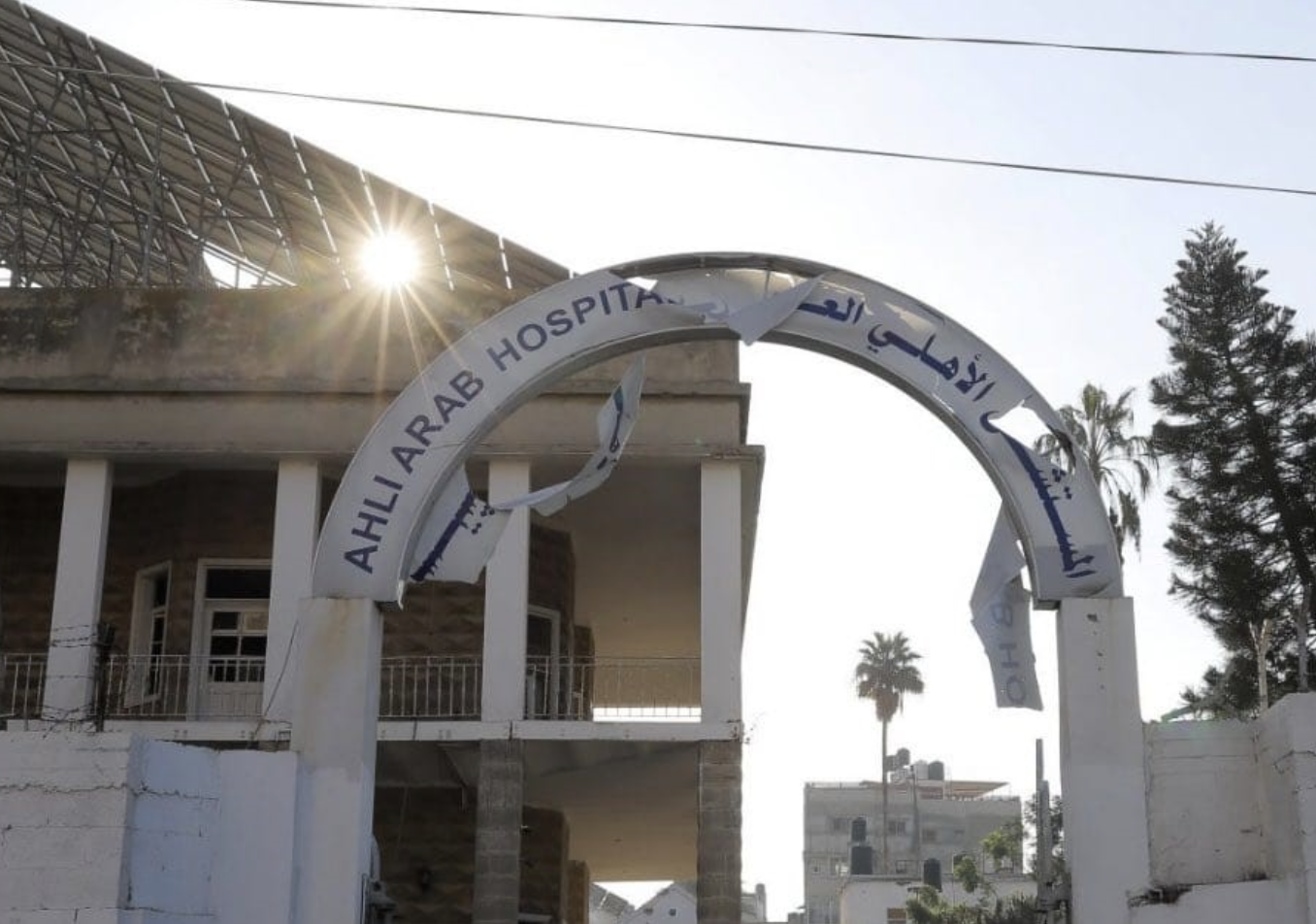
Despite these challenges, Al-Ahli Hospital in Gaza continues to operate, providing treatment for chronic illness, maternal and child health services, burn treatment, rehabilitation and medical screening.
Unequal protection
Speakers highlighted the differing levels of protection available to civilians across the region.
In Israel, most citizens have access to early warning systems, bomb shelters and missile defence systems such as the Iron Dome.
By contrast, civilians in Lebanon and Palestine generally have no comparable early warning systems or shelters.
This difference has contributed to higher civilian vulnerability when missiles strike urban infrastructure such as apartment buildings and banks.
Israel has also ordered the displacement of residents across southern Lebanon, forcing many families to leave their homes. The Diocese of Jerusalem is assisting displaced people with shelter, food and other basic necessities.
A quiet Jerusalem
Reverend Richard Sewell, who lives in Jerusalem, described the city as “extraordinarily quiet.”
Normally, hundreds of thousands of visitors would travel to Jerusalem during Ramadan. Instead, many of the city’s holy sites have closed.
“The Church of the Holy Sepulchre, Al-Aqsa compound, and the Western Wall are closed,” he said, describing the situation as a powerful symbol of the “spiritual desolation created by the pain and suffering of so many people.”
Although Jerusalem itself has not been heavily targeted, residents still hear missiles overhead as they travel towards cities such as Haifa and Tel Aviv.
When missiles approach Israeli airspace, civilians receive phone alerts and sirens sound, directing people to nearby bomb shelters.
“We sometimes hear explosions as missiles are intercepted overhead,” Sewell said.
Limited information from Iran
Information from Iran has been harder to obtain due to internet restrictions limiting communication.
However, an update shared through partners in Germany reported that as of 11 March Anglican communities in Tehran, Isfahan and Shiraz had not experienced any deaths or injuries.
Church buildings in Isfahan have sustained damage. St Paul’s Church was struck directly by a missile, while windows at St Luke’s Church were blown out.
Call for prayer and peace
Archbishop Hosam Naoum of Jerusalem asked Anglican communities worldwide to continue praying for the region and to support peacebuilding and reconciliation efforts within the Province of Jerusalem and the Middle East.
Speakers also urged participants not to forget the ongoing humanitarian crisis affecting Palestinian civilians.
Reverend Sewell said the global church has a responsibility to remain committed to peace. In a world which “invests so little in making for peace,” he said, the challenge for the church is to champion a courageous, unrelenting and unified vision of peace.