Pacific Disaster Preparedness - Anglican Missions

Pacific Disaster Preparedness

Pacific Island Countries are disproportionately vulnerable to the effects of climate change.

The Pacific is disproportionately vulnerable to the effects of climate change due to the low-lying nature of the islands. As climate change exacerbates, so too does sea level rise, cyclones, storm surges, flooding, landslides, earthquakes, and volcanic activity. These natural disasters are increasingly prevalent across the Pacific, and are having huge impacts on vulnerable communities, especially those on atoll islands or situated near the coast.

Common consequences of climate change in vulnerable communities include saltwater intrusion of previously-viable crops, flooding of infrastructure and septic systems, contamination of freshwater sources, more frequent storm surges, longer drought periods, increases in disease, and coastal erosion. When these events happen, they often have a disproportionate affect on marginalised groups, including informal settlers, women and girls, youth, the elderly, and people with disabilities.

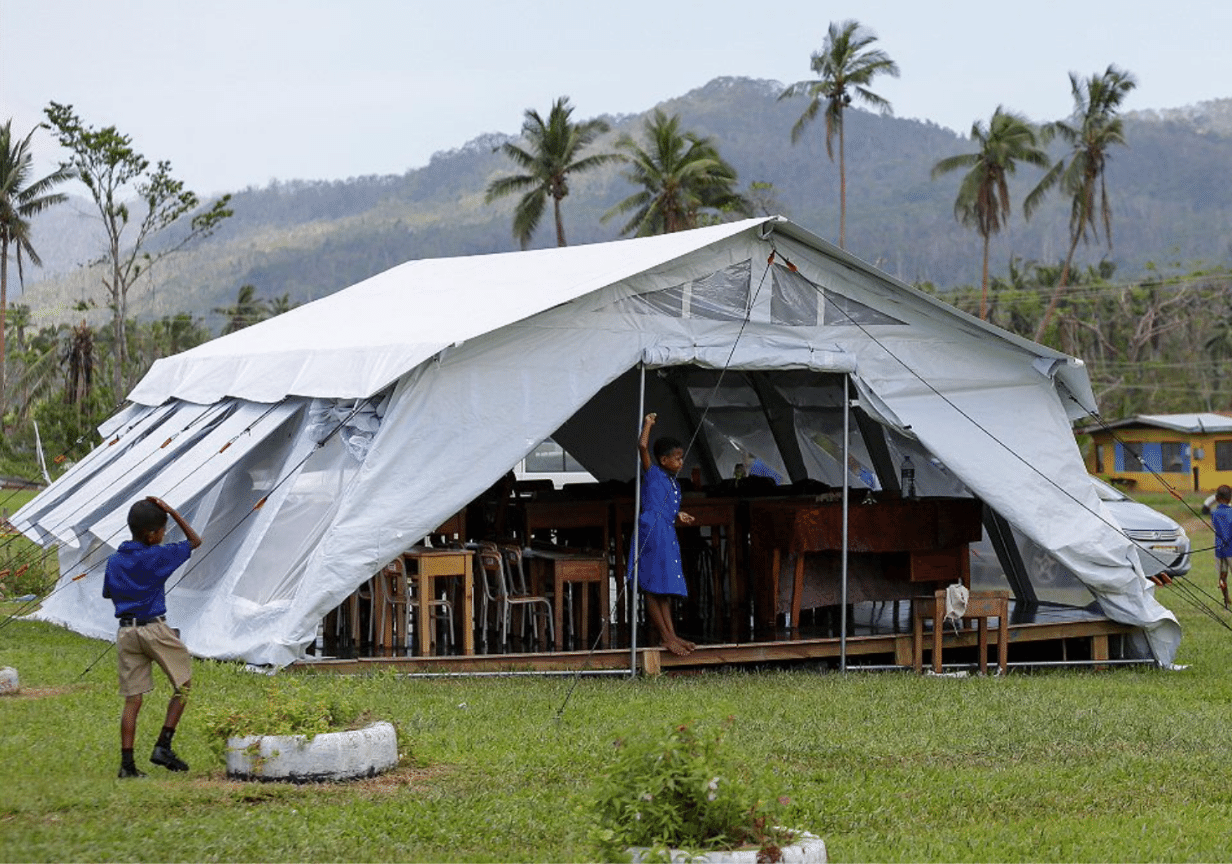
Because these disasters are increasing at an unprecedented rate, it has become vital for communities to begin focusing on disaster preparedness strategies in addition to disaster mitigation strategies. While disaster preparedness will look different in each community, recent disasters in the region have revealed a stark need for every community to have access to an evacuation center and a disaster preparedness plan which accounts for the most vulnerable areas and people in the community.

Anglican Missions has been working with vulnerable communities to improve disaster preparedness through two main avenues, including Community Integrated Vulnerability Assessments (CIVA) and prepositioned supplies. Both of these tools enable communities to design effective disaster preparedness plans for their context.


Marks of Mission

Tend

Treasure

Transform

Community Integrated Vulnerability Assessment (CIVA)

Community Integrated Vulnerability Assessment (CIVA) is a toolkit designed by the Anglican Diocese of Polynesia (ADoP) and the University of the South Pacific (USP) to reduce risk and increase climate resilience in vulnerable communities. CIVA utilises community surveys and Talanoa to identify areas in the community that are vulnerable to climate change and natural disasters. It then maps this data, providing a comprehensive visual tool allowing the community to implement an action plan which directly addresses the threat of disasters.

This project sponsors both youth in Tonga and CIVA teams abroad to be trained in CIVA so it can be implemented in their local and surrounding communities, helping them prepare for future natural disasters and other climate change impacts.

CIVA has already been used to provide a baseline survey of communities across Tonga and Fiji. As Anglican Missions works more closely with vulnerable communities in the Pacific, it will be working alongside ADoP to implement CIVA and empower vulnerable communities in the face of climate change.
Prepositioned Supplies

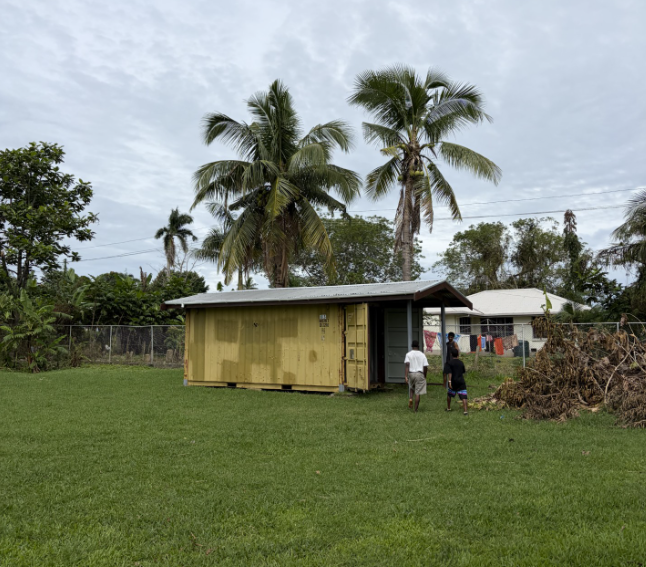
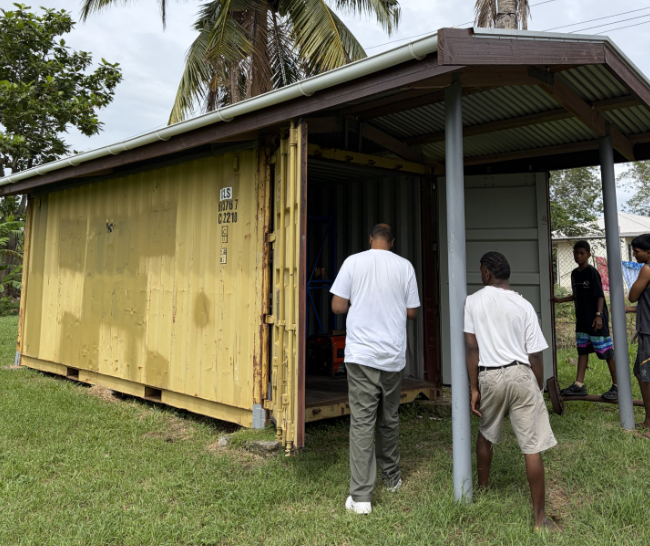
Whilst we cannot predict when the next natural disaster will occur, we can ensure Pacific Island communities are well prepared. The importance of preparedness and resource supply was highlighted in the 2022 Tonga volcanic eruption and tsunami, where external resources and aid did not arrive at the affected communities for a number of days. Despite this, the communities were still able to start responding to damage immediately through the use of four prepositioned supply containers that had previously been installed by Anglican Missions. These containers contained tools and protective equipment for local communities to use to cleanup well before government-arranged assistance arrived.

This project focuses on updating and sustaining the four prepositioned supply stations in Tonga, improving management, operation and maintenance. It also facilitates the organisation and installation of two prepositioned supplies containers in Fiji.

Prepositioned supplies are vital in small communities, especially remote communities which might be cut off by damaged roads. Anglican Missions is committed to providing further prepositioned supplies to Pacific Island communities as natural disasters become more frequent.

Anglican Alliance: Tiered Disaster Management Framework and Toolkit

Anglican Missions is working with Anglican partners and churches across the Pacific to strengthen the Anglican Church’s capacity to prepare for and respond to disasters by developing a tiered Disaster Management framework and toolkit. These resources will utilise and build on materials including the Anglican Alliance’s Partners in Resilience and Response (PiRR), the Core Humanitarian Standards (CHS), and community-based tools such as Community Integrated Vulnerability Assessment (CIVA)  

In the Pacific, the project will be coordinated through the Oceania Regional Advisory Council (ORAC), which draws expertise from development practitioners from Papua New Guinea, the Solomon Islands, Vanuatu, and Polynesia. It will work alongside partners including the Anglican Board of Mission (Australia), Melanesian Missions UK, USPG, and Anglican Alliance staff.  

The project will be informed by expertise and lived experience of Māori, whose indigenous understanding of community, whakapapa, and relationship with creation continues to shape Anglican responses to crisis and care. In Aotearoa, the project will also work with groups including Te Pīhopatanga o Aotearoa (TPOA).   

Support Disaster Preparedness in the Pacific

Donate now