
Faith Communities have always served in times of disaster and cared for those in need. Churches and marae already have significant strengths that can be incredibly effective in supporting communities before, during and after disasters. These strengths include familiar buildings, established connection networks, and deep values of manaakitanga, kaitiakitanga, whanaungatanga, and kotahitanga.
Emergency Preparedness
When disaster strikes, the church and marae are already there
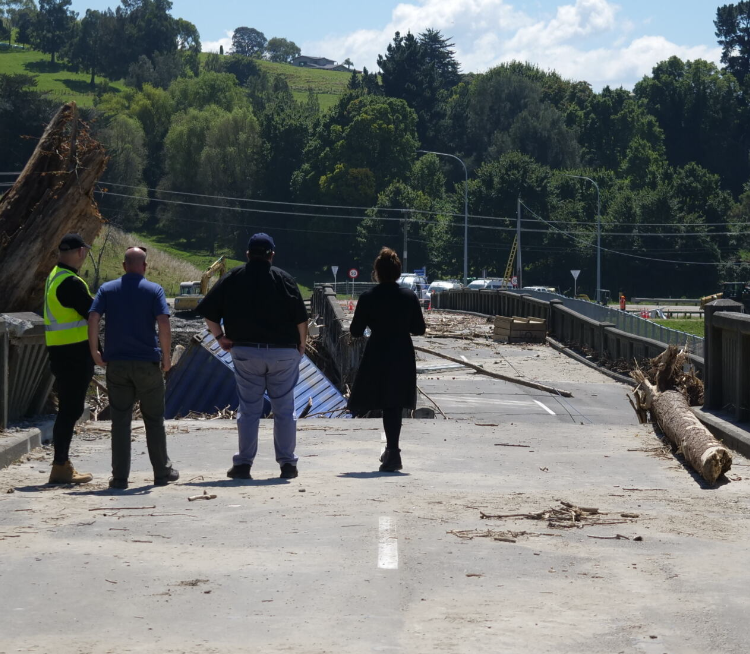

Churches and Marae are Vital in Emergencies.
Preparedness in Faith Communities
In recent years, Aotearoa has experienced more frequent significant emergencies. We have seen this firsthand as flooding in Northland, Cyclone Gabrielle, landslides, earthquakes and severe storms affect communities across the motu. At the same time, our neighbours in the Pacific continue to face increasingly intense climate-related hazards
As a result, there is a growing need for communities to be well prepared to effectively respond to the increasing pressures of disaster. A timely, coordinated response can reduce the impact of a disaster and reduce the time taken for a community to recover. By working in partnership with civil defence groups and other responding organisations, churches and marae can effectively compliment and strengthen the response, amplifying the voice of affected communities.
Local churches and marae are often at the heart of their communities. Many are already informal gathering points during emergencies. By being intentional about preparedness, churches and marae can strengthen community resilience and enhance their ability to respond effectively when it matters most.
Intentional Church Preparedness
There are two initial steps to prepare your church better for disaster. The first is being aware of existing capacity, and the second is strengthening that capacity in the form of a disaster preparedness plan.
Step One: Emergency Capacity Form
Preparing for disasters will mean something different for each church and marae, and it doesn’t necessarily require any additional funding, supplies, or knowledge. The tools we have provided on this page are here as a resource for your faith community to use however you see fit.
The first step to preparing for disasters is to be aware of primary contacts and existing strengths and resources within your faith community. The Emergency Capacity and Contact Form will walk you through a five-minute process of consolidating this information.
Any information your faith community can provide is important, so it is beneficial to fill out the form even if there are some gaps. This form will help us understand who to contact in case of emergency to offer support and prayer. We hope that it will also provide reassurance that you are not expected to face emergencies without support; support from us, from other faith communities, and from local civil defence groups.
Step two: Disaster preparedness plan
With this information written down, you can take the next step:
Develop a Simple Disaster Preparedness Plan
A disaster preparedness plan organises what you already know into a clear, practical guide for action.
Our Disaster Preparedness Guide includes practical information to help your faith community through the process of developing a disaster preparedness plan that suits your context. It includes roles and responsibilities, a plan for reaching vulnerable community members, and how to coordinate with local organisations and Civil Defence.
We will send a copy of the guide in response to your submission of the Emergency Capacity and Contact Form.
– Part A Disaster Preparedness Discussion Guide (Word Document)
– Part A Disaster Preparedness Discussion Guide (PDF)
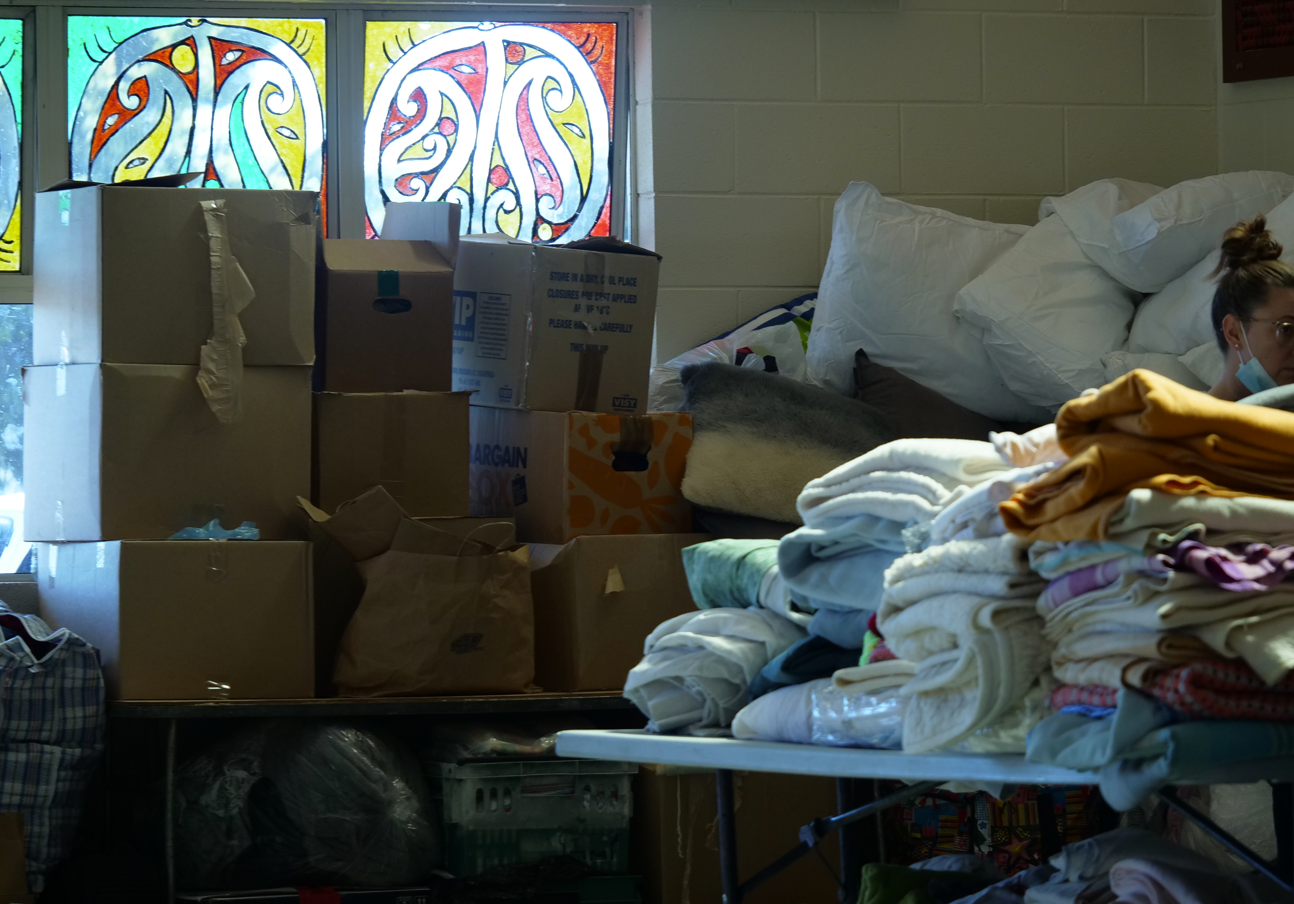
Civil Defence Groups.
Preparedness works best in partnership. We encourage every church and marae to proactively connect with their local Civil Defence or Emergency Management Group. Introducing yourself before an emergency strengthens coordination when it matters most. Find your regional civil defence group to access their webpage and contact details
Volcanic Eruption in Tonga.
When the underwater Hunga Tonga-Hunga Ha’apai volcano erupted on January 15, 2022 near Tonga, the church was well positioned to respond.
Prior to the eruption, the Diocese of Polynesia had access to both pre-positioned supply stations and lists of vulnerable community members. Immediately after disaster, they were able to access these supplies immediately for distribution, and conduct needs assessments in vulnerable areas.
The church also committed to long-term support involving psycho-social support for children, church and building repairs, and water tank repairs.
Ōmāhu Marae.
During Cyclone Gabrielle, Ōmāhu Marae served as a vital community hub. Community members organised immediately to identify and find vulnerable whānau and evacuate those in need. Alongside these rescue efforts, the marae itself was promptly organised into a distribution centre, where community members could come to receive vital supplies.
This response demonstrated just how vital faith communities are for response and relief efforts when disaster strikes. It exhibited the strengths that mana whenua already has in this space and provided an example that all churches and marae can follow in preparing their own disaster preparedness plans.
Flooding in Mozambique.
In January 2026, the Southern region of Mozambique experienced severe flooding due to extreme levels of rainfall during cyclone season. These floods have affected over 723,532 people and resulted in the deaths of 124 people.
In response to this severe flooding, the local Limbombos and Maciene Dioceses have coordinated a joint response project called “Hope restored,” which aims to deliver food, hygiene and agricultural supplies to the most vulnerable families in their region. This joint response was possible due to the churches’ direct field presence and existing social outreach structures, including the preestablished Anglican Social Action (ASA) and Mechanism of Maciene (MAM) committees from both churches. ASA and MAM have not only been able to conduct needs assessments for vulnerable community members, but have been coordinating with the National Institute for Disaster Management, local health technicians, and District Planning and Infrastructure Services.
The work being done by these diocese shows that effective disaster preparedness and response is enhanced through pre-existing knowledge, social structures, and hazard awareness.
Myanmar Earthquake.
Following the earthquake on March 28, 2025, the Church of the Province of Myanmar (CPM) responded effectively, distributing food, clean water, medicine, and shelter to over 5,000 people. This response was led by CPM’s Disaster Management Committee, which coordinated with other local churches, local NGOs, and government offices to enact smoother field operations.
On the ground, parish response looked like teams of volunteers responsible for distributing supplies to families and individuals, preparing shelters for people who had lost their homes, and identifying specific vulnerable families with children with special needs to receive priority aid.
CPM’s response stretched over several months, from directly post-disaster to late September, long after other NGOs and government groups had stopped their operations. This vital response meant that these communities were supported long after disaster, receiving long-term assistance and connection for vulnerable community members.
Our Climate and Resilience Program
Funds projects that support disaster preparedness and resilience.